Healthy, vaccinated kittens with home delivery across IndiaCall +91 91688 80648

Vaccinated and dewormedVet health checkHome delivery across IndiaSupport after you buy
A well-cared-for indoor cat often lives into its mid-teens, and many reach 18 or 20. How long your cat lives depends far more on how it lives than on luck: indoors or out, its weight, its teeth, its kidneys and how early problems are caught. Here is what to expect for each breed, and what you can do to add years.
Published 19 November 2026 · By Meenakshi Ahuja · Health
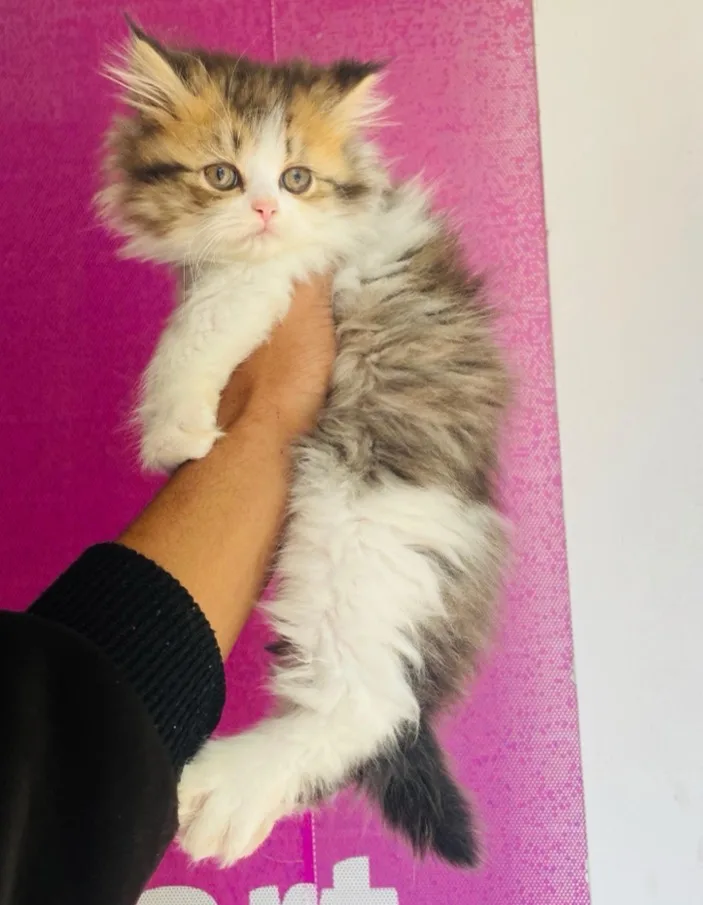
Most pet cats that live indoors and see a vet regularly live 12 to 18 years. Some breeds, such as the Siamese, Russian Blue and American Shorthair, commonly reach 18 to 20. Cats that roam outdoors in Indian cities usually live much shorter lives, because of traffic, dog attacks, fights, poisoning and infectious disease. The oldest cat on record, Creme Puff in the United States, lived to 38, but that is very rare.
| Indoor pet cat | Free-roaming or street cat | |
|---|---|---|
| Typical lifespan | 12–18 years, often more | Often only a few years |
| Main risks | Obesity, kidney disease, dental disease, falls from balconies | Road accidents, dogs, fights, poisoning, infections, heat |
| What helps most | Weight control, yearly vet checks, safe windows | Vaccination, sterilisation, a safe shelter, rescue care |
Indian desi cats are hardy and well adapted to local weather. Given a safe indoor life, they often live as long as any pedigree cat. Read about Indian desi cats.
These are typical ranges for healthy cats of each breed. Individual cats can live shorter or longer lives.
| Breed | Typical lifespan | Health points to watch |
|---|---|---|
| Persian | 12–17 years | Kidney disease (PKD), breathing and eyes in flat-faced cats, heat |
| Himalayan | 9–15 years | As for the Persian: PKD, eyes, breathing |
| Exotic Shorthair | 12–15 years | Flat-face breathing, eyes, PKD |
| Maine Coon | 12–15 years | Heart disease (HCM), hip problems, weight |
| Ragdoll | 12–17 years | Heart disease (HCM), weight |
| Siberian | 11–18 years | Generally robust; heat in hot cities |
| British Shorthair | 12–20 years | Weight gain, heart disease (HCM) |
| Siamese | 12–20 years | Dental disease, some eye and respiratory conditions |
| Bengal | 12–16 years | Heart disease (HCM), sensitive stomach |
| Bombay | 12–16 years | Weight, breathing in very short-nosed lines |
| American Shorthair | 15–20 years | Weight gain, heart disease |
| Russian Blue | 15–20 years | Weight gain |
| Sphynx | 8–14 years | Heart disease, skin care, staying warm in AC rooms |
Ranges match the ‘at a glance’ figures on each breed page. Health points are breed tendencies, not a prediction for any one cat.
A Persian typically lives 12 to 17 years. The two things that most shorten a Persian’s life are polycystic kidney disease (PKD), an inherited condition that a DNA test can screen for in the parents, and problems linked to a very flat face: breathing difficulty, overheating and eye infections. A Persian with a visible nose, kept in a cool room in summer, groomed daily and checked by a vet every year, has the best chance of a long life. See our Persian grooming guide.
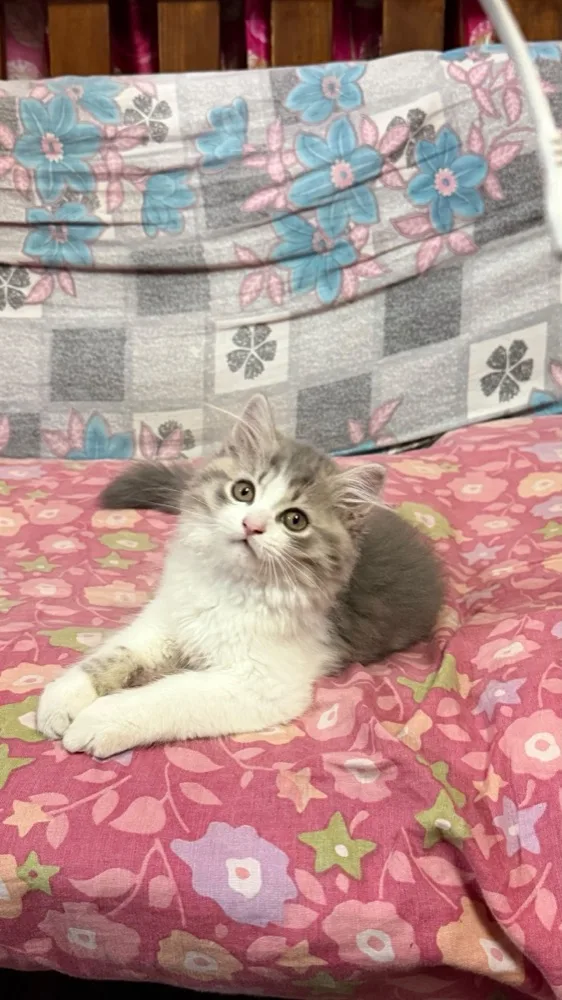
Cats grow up fast. A one-year-old cat is roughly a teenager, and after the age of two each cat year is about four human years.
| Cat’s age | About this human age | Life stage |
|---|---|---|
| 6 months | 10 years | Kitten |
| 1 year | 15 years | Kitten to young adult |
| 2 years | 24 years | Young adult |
| 5 years | 36 years | Adult |
| 8 years | 48 years | Mature adult |
| 12 years | 64 years | Senior |
| 15 years | 76 years | Senior |
| 18 years | 88 years | Senior |
An approximate guide widely used by vets; cats age at slightly different rates.
None of these are just ‘old age’ to ignore. Many can be treated or managed, and catching them early gives your cat more good years.
A long life starts before you bring a kitten home. Ask whether the parents were health-tested, choose a breeder who can show the mother cat, and take your kitten to your own vet within 48 hours. Our buying a kitten checklist lists the questions to ask, and our first-month kitten guide covers the early weeks.
Indoor pet cats commonly live 12 to 18 years. Cats that roam outdoors in Indian cities usually live much shorter lives because of traffic, dogs, fights and disease.
Usually 12 to 17 years. Screening for PKD, a cool room in summer and regular vet checks help.
Siamese, Russian Blue, American Shorthair and British Shorthair cats often reach 18 to 20 years.
Yes, much longer on average, because indoor cats avoid traffic, attacks, fights and many infections.
About 56 human years. After the age of two, each cat year is roughly four human years.
Looking for a kitten? See all breeds and prices, or WhatsApp us on +91 91688 80648.