Healthy, vaccinated kittens with home delivery across IndiaCall +91 91688 80648

Vaccinated and dewormedVet health checkHome delivery across IndiaSupport after you buy
A Himalayan has a Persian’s long, dense coat with a Siamese-style colour pattern: a pale body with darker ears, face, legs and tail. Grooming it is much like grooming a Persian, with a few things that are special to the pointed coat. This guide covers both.
Published 19 November 2026 · By Meenakshi Ahuja · Care and grooming
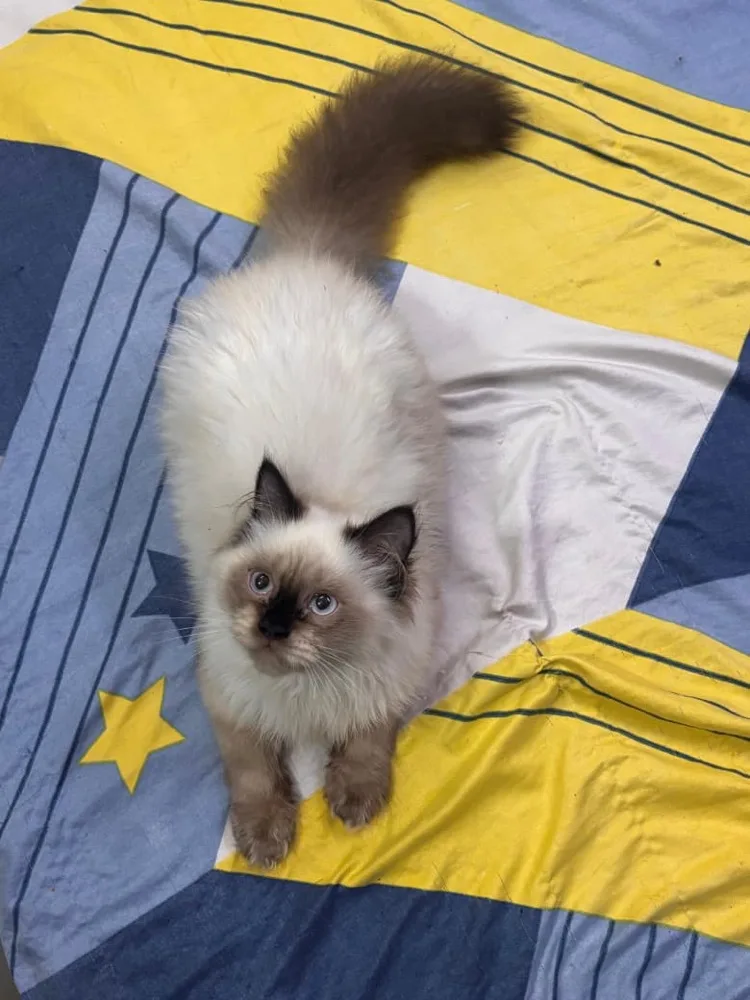
Under the colour, a Himalayan’s coat is the same as a Persian’s: a long top coat over a soft, thick undercoat that mats easily. The difference is the colourpoint pattern. The colour depends on temperature: the enzyme that makes dark pigment only works in the cooler parts of the body, so the ears, face, paws and tail are darker and the warm body stays pale.
That has three practical effects on grooming:
You need the same basic kit as for a Persian: a wide-toothed and a fine-toothed metal comb, a soft slicker brush, a mat splitter, a cat nail clipper and cotton pads. Our Persian grooming guide explains what each tool does and how often to bathe.
Ten minutes a day is enough. Missing a few days is how mats start.
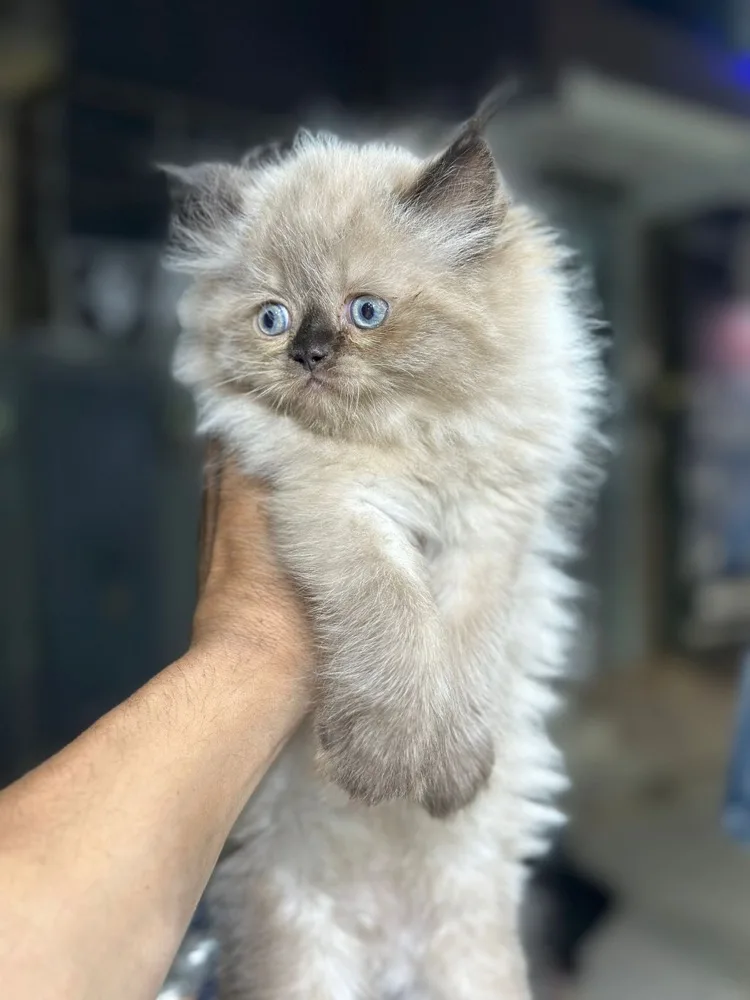
Himalayans have the same flat face and short tear ducts as Persians, so tears overflow onto the face. On a seal or chocolate point the mask hides the staining, which makes it easy to forget. Feel the fur under the eyes: if it is damp or crusty, it needs wiping, even if it looks clean. On cream, blue and lilac points the staining is visible, as on a white Persian.
Blue eyes are part of the breed. Cloudiness, a third eyelid showing, squinting or coloured discharge are not, and need a vet.
If a Himalayan’s coat becomes badly matted, a groomer may need to clip it. Be prepared for the hair that regrows on the body to be darker than before, sometimes in a patch exactly the shape of the clipped area. It is the temperature effect again: shaved skin is cooler while the hair is short. The colour usually fades back to pale after the next full moult, but it can take months.
It is one more reason to comb daily rather than rely on clipping, and not to shave a Himalayan for summer. A cool room does more for its comfort.
A bath every four to six weeks keeps the coat from getting oily. Comb out all tangles first, use a cat shampoo and conditioner, rinse thoroughly and dry the undercoat completely with a dryer on a low setting. The pale body coat can yellow slightly from grease and dust; regular baths keep it bright. In the monsoon, never leave the coat damp near the skin.
Himalayans are usually calm, gentle cats, which helps. Build on it early:
Our new kitten guide has more on settling a kitten in its first weeks.
| Day | Task |
|---|---|
| Every day | Comb through the whole coat; wipe the eyes and face |
| Twice a week | Slicker brush to fluff the coat; check the ears |
| Every 2–3 weeks | Trim the claw tips |
| Every 4–6 weeks | Bath and full dry |
| Every few months | Sanitary trim around the bottom by a groomer, if needed |
Like Persians, Himalayans are flat-faced and long-haired, so they need a cool or air-conditioned room in the hottest months and are happiest indoors. See our guide to cat breeds and Indian weather for summer care, and the Himalayan kittens page for colours and kittens ready now.
Daily. A wide-toothed and then a fine-toothed metal comb for about ten minutes keeps mats from forming.
Mostly yes. The coat is the same type; the main differences are the colourpoint pattern and that clipped hair can grow back darker.
The colourpoint pigment depends on skin temperature. Shaved skin is cooler, so the new hair comes in darker. It usually lightens again after the next moult.
Wipe each eye daily with a fresh damp cotton pad, away from the eye, and dry the fold under it. See a vet for coloured or sticky discharge.
Looking for a kitten? See all breeds and prices, or WhatsApp us on +91 91688 80648.