Healthy, vaccinated kittens with home delivery across IndiaCall +91 91688 80648

Vaccinated and dewormedVet health checkHome delivery across IndiaSupport after you buy
Both are calm, round-faced cats that love a quiet home, and both are among the most searched breeds in India. The big differences are grooming, health and price.
Published 17 November 2026 · By the MyCatShop team
| Persian | British Shorthair | |
|---|---|---|
| Coat | Long; brush every day | Short and dense; brush once a week |
| Face | Flat or semi-flat (doll face) | Round, with a normal nose |
| Personality | Gentle, quiet, a lap cat | Calm, independent, happy beside you |
| Time alone | Prefers company | Copes well with a few hours alone |
| Heat | Low tolerance; needs a cool room | Moderate; a cool room on hot days |
| Main health watch-outs | Breathing, eyes, kidneys (PKD) | Heart (HCM), weight gain |
| Kitten price in India | ₹25,000–₹60,000 | ₹90,000–₹3,80,000 |
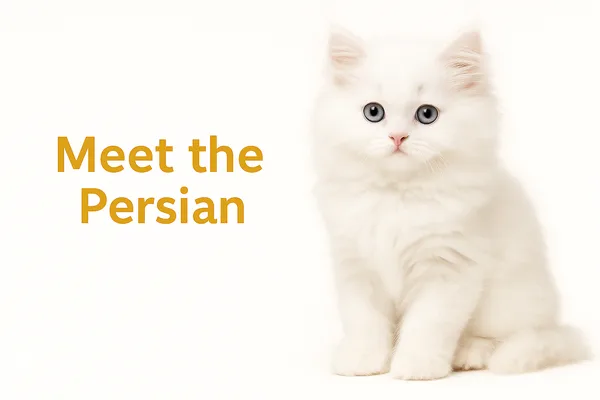
The Persian has a long, flowing coat and a flat or semi-flat face, in white, cream, golden, silver, blue and many more colours. The British Shorthair has a thick, plush short coat, round copper or orange eyes and chubby cheeks. Blue-grey is the classic colour, with lilac, golden and colourpoint also popular.
Both breeds are calm and quiet. A Persian is usually more of a lap cat that wants to be near you all day. A British Shorthair is affectionate but independent: it prefers sitting beside you to being carried, and it copes better with working owners who are out for part of the day.
This is the biggest practical difference. A Persian needs about ten minutes of brushing every day, plus a daily eye wipe for tear stains; a skipped week leads to painful mats. A British Shorthair needs a brush once a week, more during shedding season. If you can’t commit to daily grooming, the British Shorthair, or the Exotic Shorthair (a short-haired Persian), is the easier choice.
Flat-faced Persians can have narrow nostrils, breathing difficulty in the heat, eye infections and crowded teeth, and the breed carries a risk of inherited kidney disease (PKD). Ask for the parents’ PKD DNA test results. British Shorthairs are generally robust but can develop heart disease (hypertrophic cardiomyopathy) and gain weight easily, so measure their food. Read the breed health sections on the Persian and British Shorthair pages before you choose.
Both breeds live indoors happily in India. The Persian is more heat-sensitive because of its flat face and long coat, so it needs a cool or air-conditioned room in summer. The British Shorthair’s dense coat also makes it glad of a cool room on the hottest days. Our guide to the best cat breeds for Indian weather compares all the breeds.
Persians are one of the most affordable pedigree breeds in India: our Persian kittens usually cost ₹25,000 to ₹60,000, with imported and show-quality kittens costing more. British Shorthairs are rarer in Indian catteries and usually cost ₹90,000 to ₹3,80,000, depending on colour, papers and whether the line is imported. Very cheap ads for either breed are often mixed-breed kittens or scams; see how to buy a cat safely.
In India the Persian is usually cheaper: about ₹25,000 to ₹60,000 for a pet-quality kitten, against ₹90,000 to ₹3,80,000 for a British Shorthair.
The British Shorthair is easier day to day because it needs little grooming and copes with time alone. A Persian suits first-time owners who are home a lot and happy to brush daily.
Both shed. Persian hair is longer and more visible, and it mats if not brushed; British Shorthairs shed a dense undercoat, especially seasonally.
Yes. We share recent photos and videos of the kittens available now on WhatsApp, and you choose from them. After you book with a 25% advance, we arrange a video call with your kitten wherever possible.
Looking for a kitten? See all breeds and prices, or WhatsApp us on +91 91688 80648.